Easy Crochet Projects for Beginners to Try
Crochet can look complicated when you see a finished blanket, detailed flower, or intricate amigurumi piece. The good news is that you do not need advanced skills to make something beautiful. These 12 easy crochet projects for beginners are designed to help you practice basic stitches while creating useful items you can actually enjoy.
If you are holding a crochet hook for the first time, start with small projects that teach one or two skills at a time. Simple coasters can help you practice working in rounds, while a scarf gives you plenty of practice keeping your stitches even.
In this guide, I’ll walk through 12 beginner-friendly crochet ideas, the skills each one teaches, the supplies you need, and ways to make your first projects easier.
What Are the Easiest Crochet Projects for Beginners?
The easiest crochet projects for beginners are usually small, simple designs that use basic stitches and require little shaping. Good starting projects include dishcloths, coasters, scarves, headbands, granny squares, and simple baskets.
Choose a project based on the skills you already know:
- Complete beginner: chain, single crochet, simple coaster
- Beginner: dishcloth, headband, scarf
- Confident beginner: granny square, basket, beanie
- Ready for a challenge: simple tote bag or flower
The most important thing is not to choose a project simply because it looks attractive. Pick one that gives you a chance to repeat the same stitch several times. Repetition is one of the fastest ways to build crochet muscle memory.
Basic Crochet Supplies You Need
You don’t need a large collection of supplies to start crocheting. A few inexpensive tools are enough for most beginner projects.
| Supply | Beginner recommendation | Why you need it |
|---|---|---|
| Crochet hook | 4.0–5.5 mm | Comfortable for learning |
| Yarn | Medium-weight yarn | Easy to see and handle |
| Scissors | Small sharp scissors | Cutting yarn |
| Yarn needle | Large-eye needle | Weaving in ends |
| Stitch markers | Optional | Helps mark rounds and stitches |
| Measuring tape | Optional | Checking project size |
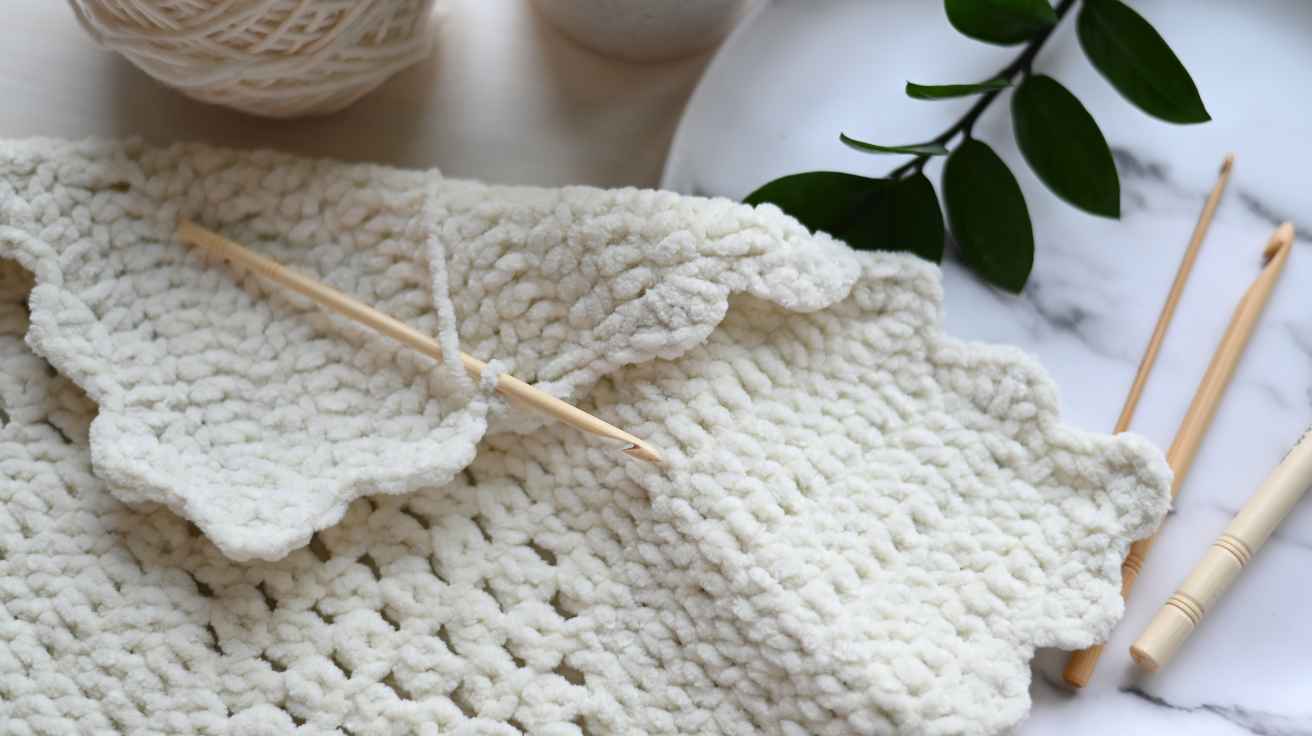
For your first project, consider choosing a smooth, light-colored yarn. Very dark or fuzzy yarn can make it harder to see individual stitches.
1. Crochet Coasters

Crochet coasters are one of the best easy crochet projects for beginners because they are small and quick to finish.
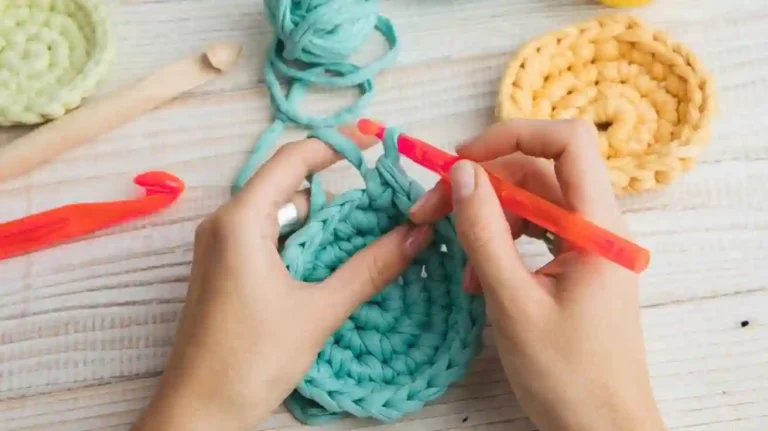
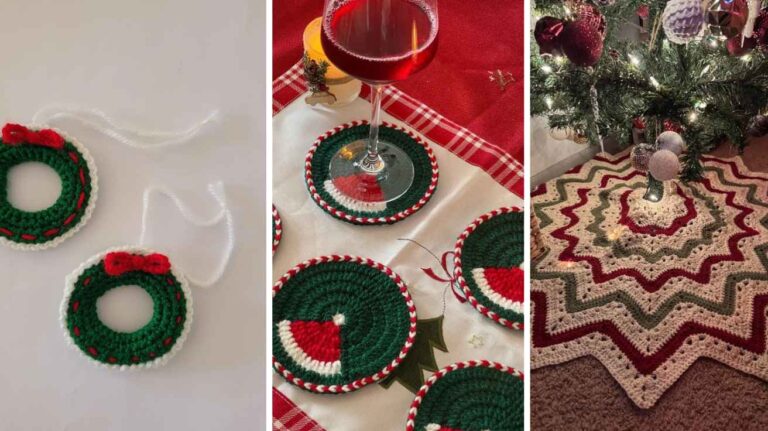
A simple round coaster lets you practice chaining, slip stitches, single crochet, and working in the round. You can make a set using one color or combine several colors for a cheerful table setting.
Why beginners should try coasters
- They use a small amount of yarn.
- Most can be completed quickly.
- Mistakes are easy to identify.
- You can practice working in rounds.
- They make useful handmade gifts.
Cotton yarn is particularly practical for coasters because it is durable and generally handles everyday use well.
2. Simple Crochet Dishcloth

A dishcloth is another excellent beginner crochet project. It is usually made as a simple square or rectangle, so you don’t need complicated shaping.
Start with a foundation chain and work rows of a basic stitch. Single crochet creates a firm fabric, while half double crochet can give you a slightly softer texture.
A dishcloth also teaches an important lesson: consistent tension matters more than speed.
If your first few rows look uneven, don’t worry. Your hands will naturally become more consistent as you practice.
3. Crochet Headband

A crochet headband is a fun project when you want something wearable without committing to a full sweater or cardigan.
One of the easiest approaches is to crochet a long rectangle and join the short ends together. You can use half double crochet, single crochet, or a simple textured stitch.
This project is particularly useful for practicing:
- Foundation chains
- Working in rows
- Turning your work
- Counting stitches
- Joining pieces
Once you understand the basic construction, you can change the width, yarn color, and texture to create completely different designs.
4. Easy Crochet Scarf

A scarf is one of the classic easy crochet projects for beginners because the basic shape is simply a long rectangle.
You can make a beginner scarf using single crochet, half double crochet, or double crochet. If you want your scarf to grow faster, a taller stitch such as double crochet can help you work through rows more quickly.
The biggest challenge is maintaining the same stitch count from row to row. Count your stitches regularly, especially during the first several rows.
Beginner tip
Place a stitch marker in the first or last stitch of each row if you often lose track of where your row begins.
5. Crochet Granny Squares

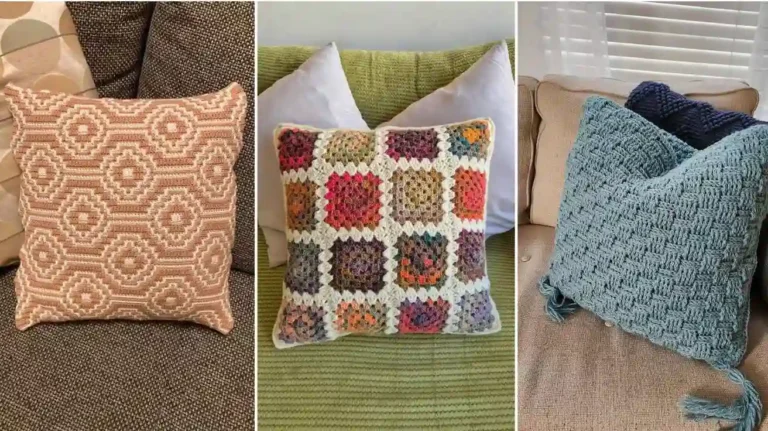
Granny squares are a wonderful next step after learning basic crochet stitches. A traditional granny square is built in rounds, making it a useful way to practice increases and working into spaces. Once you can make individual squares, you can join them to create blankets, bags, pillows, scarves, and other projects.
Try making your first granny square with just one color. Once you understand the pattern, introduce two or three colors.
The best part is that you don’t need to make an entire blanket at once. You can make one square whenever you have a little free time.
6. Crochet Flower

A small crochet flower is a quick project that can introduce you to working in rounds and creating shapes.
You can attach finished flowers to:
- Headbands
- Bags
- Hats
- Blankets
- Hair accessories
- Gift wrapping
Crochet flowers are also excellent scrap-yarn projects. Instead of throwing away small leftover pieces from other projects, turn them into colorful decorations.
7. Crochet Mug Cozy

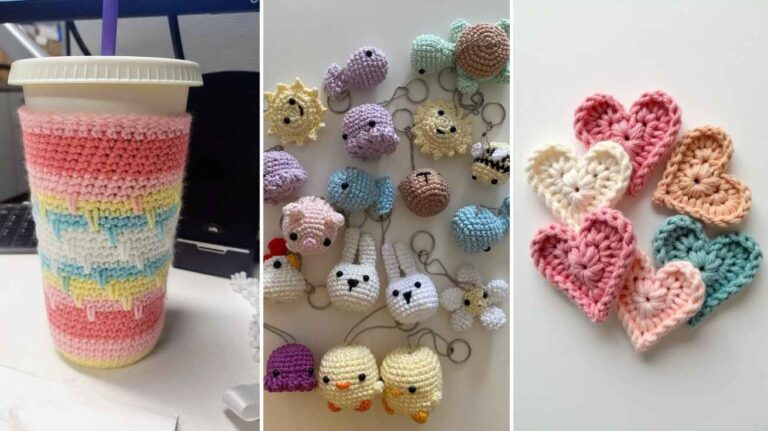
A mug cozy is essentially a small crocheted sleeve designed to fit around a mug or cup.
It is usually made from a narrow rectangle that is joined at the ends or secured with a button. That makes it an excellent project for learning basic rows without requiring complicated shaping.
You can customize the cozy with stripes, buttons, flowers, or simple embroidery. Just remember that a crochet cozy should not be treated as a heatproof barrier. Keep it away from very hot surfaces and use appropriate care around hot drinks.
8. Simple Crochet Tote Bag


Once you are comfortable making rectangles and basic stitches, try a simple crochet tote bag.
A beginner design can consist of two crocheted panels joined together, with crocheted handles added at the top. You can also crochet the bag in one piece depending on the pattern.
This project gives you useful practice with:
- Counting stitches
- Maintaining straight edges
- Joining crochet pieces
- Making handles
- Creating a larger finished item
Choose sturdy yarn if you plan to use the bag regularly.
9. Crochet Scrunchie

A crochet scrunchie is tiny, inexpensive, and easy to personalize.
You crochet around an elastic hair tie, creating a decorative fabric covering. Depending on your stitch and yarn, you can make a simple scrunchie or a fuller ruffled style.
This is also a great project if you want to use leftover yarn. Because the project is small, you can experiment with colors and stitches without spending hours on a project that may not work out.
10. Beginner Crochet Basket

A small crochet basket can help you move from flat projects into three-dimensional crochet.
You typically begin with a flat base and then work upward to form the sides. This teaches you how crochet behaves when you increase and then continue without increasing.
Use a sturdy yarn or several strands if the pattern recommends it. A basket needs more structure than a soft scarf. Small baskets are useful for organizing yarn, accessories, craft supplies, or small household items.
11. Easy Crochet Beanie

A basic crochet beanie may look more advanced, but beginner-friendly designs can be surprisingly manageable.
Many simple hats begin at the top and grow outward through strategically placed increases. Others start with a rectangle that is joined and shaped.
Before starting, check the pattern’s recommended measurements. A hat that is too loose or too tight can be uncomfortable even if your stitches are technically correct. This project is a good introduction to shaping and working in rounds.
12. Simple Crochet Blanket

A blanket is the largest project on this list, but it can still be beginner-friendly if you choose a simple stitch pattern.
For a first blanket, avoid complicated colorwork or elaborate stitch combinations. Choose a repetitive stitch that you enjoy making. A simple blanket can teach you patience, tension control, stitch counting, and row consistency.
A smart way to start
Don’t begin with a huge bed-sized blanket. Make a small baby blanket, lap blanket, or throw first. You’ll learn the same fundamental skills while having a much more manageable project.
How to Choose Your First Crochet Project
When deciding between these 12 easy crochet projects for beginners, think about what you want to learn rather than simply what looks pretty on Pinterest.
If you want a quick win, make a coaster or flower.
If you want to practice rows, choose a dishcloth or scarf.
If you want to learn crochet in the round, try a coaster, granny square, or beanie.
If you want something useful for your home, make a basket or blanket.
This approach creates a natural learning path instead of forcing you to jump from a simple chain directly into a complicated pattern.
What Crochet Stitches Should a Beginner Learn First?
Start with a small group of stitches rather than trying to memorize everything at once.
Chain stitch
The chain stitch is commonly used to create the foundation of a crochet project and can also appear within stitch patterns.
Single crochet
Single crochet creates a relatively firm fabric and is one of the most useful stitches for beginners.
Half double crochet
Half double crochet gives you a little more height than single crochet while remaining relatively simple to learn.
Double crochet
Double crochet creates a taller stitch and can help larger projects grow more quickly.
Once you understand these basic stitches, many beginner crochet patterns become much easier to read.
How Can I Make Crochet Easier as a Beginner?
The biggest beginner mistake is trying to crochet too quickly.
Slow down and watch where your hook enters the stitch. Count your stitches at the end of each row. If your edges are getting wider or narrower, stop and figure out why before continuing.
Another useful trick is to photograph your work after each major step. If you need to undo a few rows, you can look at the photo to remember what the previous section looked like.
One useful beginner rule
Choose projects that repeat the same movement.
Instead of measuring progress by how complicated your project looks, measure it by how many times you practice the same basic technique. A simple scarf can teach more about tension and stitch consistency than a complicated pattern that uses ten different stitches.
How Long Does It Take to Learn Crochet?
Most people can learn the basic crochet movements in a relatively short practice session, but becoming comfortable takes repeated practice.
Your first project may be slow because you are thinking about every movement. After making several small projects, chaining, inserting the hook, yarn overs, and pulling loops through stitches become much more natural.
Rather than trying to master crochet in one day, spend 15–30 minutes practicing regularly.
Common Beginner Crochet Mistakes
Even experienced crocheters make mistakes. The difference is that they learn how to recognize and fix them.
Losing stitches
If each row becomes shorter, you may be accidentally skipping the first or last stitch.
Adding extra stitches
If your project keeps getting wider, you may be crocheting into an extra stitch or accidentally working into the turning chain.
Tight tension
Pulling the yarn too tightly can make it difficult to insert your hook into the next stitch.
Choosing difficult yarn
Fuzzy, very dark, or extremely thin yarn can make stitches difficult to see.
Skipping the gauge
For scarves and small accessories, gauge may not matter much. For fitted projects such as hats or garments, it can significantly affect the final size.
What Should You Crochet First as a Complete Beginner?
If you have never crocheted before, start with a small coaster or dishcloth.
These projects are inexpensive, don’t require much yarn, and allow you to practice basic stitches repeatedly. Once you are comfortable with your tension and stitch counting, move to a headband, scarf, granny square, or another project that interests you.
The goal of your first project isn’t perfection. It’s learning how the yarn, hook, and stitches work together.
FAQ
What is the easiest thing to crochet for a beginner?
A small coaster, dishcloth, or simple scarf is an excellent starting point. These projects generally use basic stitches and simple shapes, allowing beginners to focus on tension, stitch counting, and working in rows or rounds.
What can I crochet in one day?
Small projects such as coasters, flowers, scrunchies, and mug cozies can often be completed in a short crafting session. The actual time depends on your experience, yarn weight, hook size, pattern complexity, and how much time you have available.
What should I crochet first?
Start with a small project that uses one or two basic stitches. A coaster or dishcloth is a practical first choice because you can practice repeatedly without committing to a large amount of yarn or time.
What crochet stitch is best for beginners?
Single crochet is one of the easiest stitches to learn because it uses a straightforward series of movements and creates a firm fabric. Half double crochet and double crochet are also useful beginner stitches.
Can I learn crochet by myself?
Yes. Many people learn crochet independently using written patterns, diagrams, video tutorials, and repeated practice. Start with basic stitches and gradually move to projects involving shaping, color changes, and working in rounds.