Crochet Farmhouse Blanket: A Cozy, Timeless Project for Your Home
There’s something special about wrapping yourself in a handmade blanket. Its soft texture, beautiful colors, and thoughtful details can make any room feel warmer and more inviting. A crochet farmhouse blanket brings all these qualities together with a classic design that works beautifully in modern and traditional homes.
Whether you’re new to crochet or have completed several projects, making your own farmhouse blanket is a rewarding way to add handmade charm to your space. You can choose your favorite yarn, experiment with neutral colors, and customize the size to suit your needs.
In this guide, you’ll learn how to crochet a farmhouse blanket, which materials to choose, which stitches work best, and how to create a timeless farmhouse look. You’ll also discover sizing recommendations, color ideas, and practical tips to help you achieve a beautiful finish.
The best part? You don’t need complicated stitches to create a blanket that looks beautiful and feels cozy.
What Is a Crochet Farmhouse Blanket?
A crochet farmhouse blanket is a handmade blanket inspired by the warm, simple, and natural style of farmhouse decor. It often features textured stitches, neutral colors, classic stripes, and clean edges.
Unlike blankets with intricate motifs or elaborate patterns, farmhouse designs usually focus on simple stitches and pleasing color combinations. This makes them suitable for beginners and experienced crocheters alike.
Common features include:
- Neutral colors: Cream, ivory, beige, gray, taupe, and soft brown.
- Textured stitches: Single crochet, half double crochet, and double crochet.
- Classic patterns: Horizontal stripes, solid-color panels, and repeating stitch patterns.
- Simple finishes: Neat borders, fringe, or decorative tassels.
- Versatile sizing: Options for baby blankets, sofa throws, and bed blankets.
A crochet farmhouse blanket can complement a living room sofa, add warmth to a guest bedroom, or make a thoughtful handmade gift.
The secret to the farmhouse look is balance. A simple stitch pattern paired with two or three complementary colors often creates a more timeless result than a design with too many competing details.
Why Make Your Own Crochet Farmhouse Blanket?
Making your own blanket gives you control over its appearance, size, texture, and materials. You can also adjust the pattern to match your skill level.
Here are four reasons to try this project.
1. Customize the Colors
Choose a palette that complements your home. Cream and gray create a classic combination, while sage green and ivory offer a softer, natural look.
For a warmer design, combine beige, oatmeal, and brown.
2. Create a Practical Home Decor Piece
A handmade blanket can add texture to a plain sofa or bring a cozy accent to a bedroom. Fold it over an armchair, place it at the end of a bed, or keep it in a basket beside your favorite reading spot.
3. Learn Useful Crochet Skills
A farmhouse blanket is an excellent project for practicing foundation chains, basic stitches, turning chains, color changes, and finishing techniques.
These skills also transfer to scarves, cushion covers, dishcloths, and other crochet projects.
4. Make a Meaningful Handmade Gift
A customized blanket can be a thoughtful gift for a housewarming, birthday, wedding, or baby shower. Choose colors that suit the recipient and adjust the dimensions to match how they plan to use it.
Materials You’ll Need for a Crochet Farmhouse Blanket
Before starting, gather the right supplies. Choosing suitable yarn and a comfortable crochet hook makes the process easier and helps you achieve an even texture.
| Material | Recommendation | Purpose |
|---|---|---|
| Yarn | Medium-weight worsted yarn, category 4 | Creates a versatile blanket fabric |
| Crochet hook | Often 5.0–6.0 mm, depending on yarn | Helps create consistent stitches |
| Scissors | Sharp yarn scissors | Cuts yarn neatly |
| Yarn needle | Blunt tapestry needle | Weaves in loose ends |
| Measuring tape | Flexible measuring tape | Checks blanket dimensions |
| Stitch markers | Optional | Marks important stitches |
Which Yarn Is Best for a Farmhouse Blanket?
Medium-weight worsted yarn is a practical starting point for many crochet farmhouse blankets. It offers a useful balance of warmth, structure, and manageable stitch definition.
You can choose from several yarn types:
- Acrylic yarn: Often affordable, widely available, and easy to care for.
- Cotton yarn: Creates a breathable fabric with a more structured feel, although larger cotton blankets can become heavy.
- Wool yarn: Offers warmth and elasticity, but care requirements vary by fiber.
- Acrylic-cotton blends: Can combine easy care with some of cotton’s natural feel.
Check the yarn label for its recommended hook size and washing instructions. If you plan to use the blanket frequently, choose a fiber that suits your household’s cleaning needs.
Helpful tip: Buy enough yarn for the entire project before you begin. Choosing yarn from the same dye lot helps maintain consistent colors.
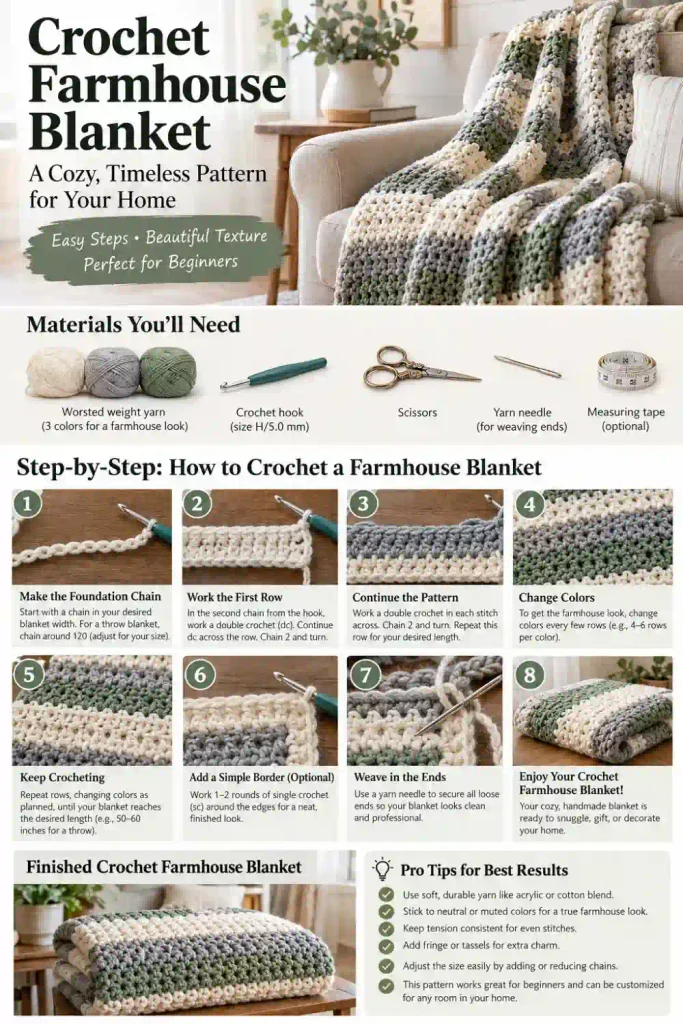
How to Crochet a Farmhouse Blanket: Step-by-Step Instructions
This beginner-friendly method uses a simple repeating stitch pattern with optional color changes. The exact stitch and chain count will depend on your chosen yarn, hook, and finished blanket size.
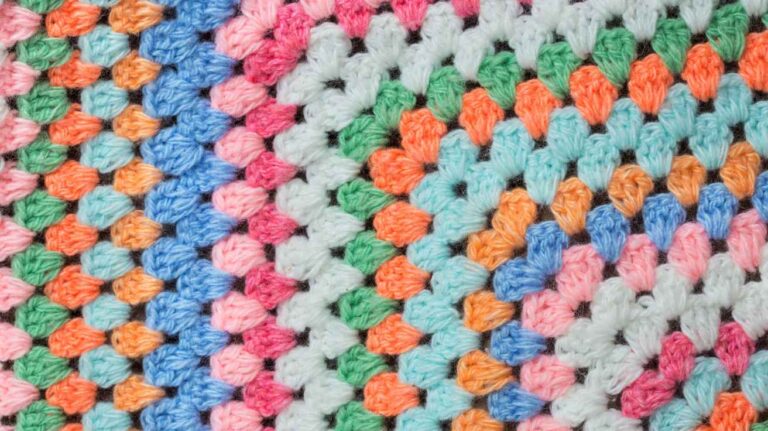
For a classic farmhouse appearance, try alternating cream and gray with a narrow sage-green stripe.
Step 1: Choose Your Yarn and Hook
Select your yarn colors and check the manufacturer’s recommended hook size.
A 5.0 mm or 5.5 mm hook is a reasonable starting point for many worsted-weight yarns, but the correct size depends on your yarn and how tightly you crochet.
Make a small test swatch before beginning the blanket. This helps you check the texture and decide whether you like the fabric’s thickness.
Step 2: Make a Foundation Chain
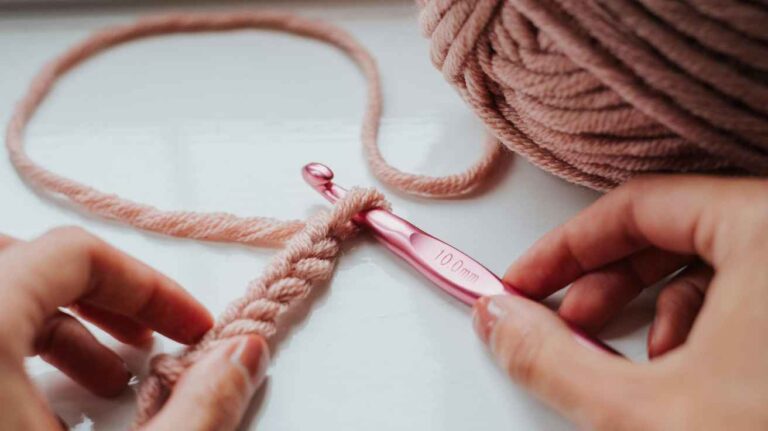
Create a slip knot and place it on your hook. Yarn over and pull the yarn through the loop to form your first chain stitch.
Continue chaining until you reach the desired width. For a simple double-crochet design, your foundation chain can begin with any number of stitches, depending on the turning-chain convention and pattern you follow.
Rather than relying on a fixed number, measure your chain against the desired blanket width. A foundation chain measuring approximately 50 inches can be a starting point for a throw, but the finished width may vary as you work the first row.
Beginner tip: Avoid pulling the chain too tightly. A tight foundation can make the bottom edge narrower than the rest of the blanket.
Step 3: Work the First Row
For this example, use double crochet stitches.
- Yarn over.
- Insert your hook into the appropriate chain.
- Yarn over again and pull up a loop.
- Yarn over and pull through two loops.
- Yarn over and pull through the remaining two loops.
Repeat the stitch across the row.
At the end, make the turning chain required by your chosen pattern and turn your work.
If you prefer a denser fabric, you can use single crochet or half double crochet instead. Changing stitches affects the blanket’s texture, dimensions, and yarn requirements.
Step 4: Repeat the Stitch Pattern
Continue working the same stitch across each row.
Keep your tension as consistent as possible. If you crochet tightly in one section and loosely in another, the blanket may develop uneven edges or changes in width.
Measure your work occasionally to check that the sides remain straight.
For a beginner, repeating the same stitch is often easier than switching between several complicated patterns. It also creates a calm, consistent texture that suits farmhouse decor.
Step 5: Add Farmhouse Stripes
Color changes can turn a simple blanket into a distinctive farmhouse design.
Try this palette:
- Cream as the main color.
- Gray for wider accent stripes.
- Sage green or taupe for occasional narrow stripes.
To change colors neatly, complete the final stitch of the current row until two loops remain on the hook. Yarn over with the new color and pull it through those loops, following the pattern’s color-change method.
Continue crocheting with the new yarn.
You can change colors every four, six, or eight rows, depending on the stripe width you prefer. These are design suggestions rather than fixed pattern requirements.
Design tip: Arrange your yarn balls in the intended color order and photograph them before crocheting. This lets you preview the color balance before committing hours to the project.
Step 6: Crochet Until You Reach the Desired Length
Continue repeating the stitch pattern until the blanket reaches your preferred length.
Measure the blanket while it is laid flat. Crochet fabric can stretch, so avoid pulling it while measuring.
For a sofa throw, you might aim for approximately 50 by 60 inches. A smaller lap blanket or a larger bed blanket will require different dimensions and amounts of yarn.
Remember that your stitch tension affects the final measurements. If the blanket is growing wider or narrower, check your stitch count before continuing.
Step 7: Add a Simple Border
A border creates a clean, finished appearance.
Join your chosen yarn at a corner and work single crochet stitches around the edges. Add extra stitches at corners when needed to help the fabric lie flat.
If the edge ripples, you may have added too many stitches. If it pulls inward, you may need additional stitches.
Work one or two rounds, depending on the appearance you want.
A narrow border in cream can frame a multicolored blanket without distracting from the stripes.
Step 8: Weave in the Loose Ends and Finish
Cut the yarn, leaving a suitable tail. Thread the tail through a yarn needle and weave it through several stitches on the wrong side of the blanket.
Change direction where appropriate to help secure the end without creating a bulky area. Repeat for all loose ends.
If desired, add fringe or tassels to the short edges. Keep decorative additions secure and consider the intended user when making blankets for babies or young children.
Finally, wash and dry the blanket according to the yarn label. Blocking may help even out the shape, provided the fiber can be treated safely.
Your crochet farmhouse blanket is now ready to use, display, or give as a handmade gift.
Best Crochet Stitches for a Farmhouse Blanket
You don’t need advanced crochet skills to create a beautiful farmhouse blanket. Several basic stitches work well, depending on the texture and thickness you want.
| Stitch | Texture | Best For |
|---|---|---|
| Single crochet | Dense and firm | Warm, sturdy blankets |
| Half double crochet | Balanced and textured | Everyday throws |
| Double crochet | Taller stitches with flexible drape | Projects that build length quickly |
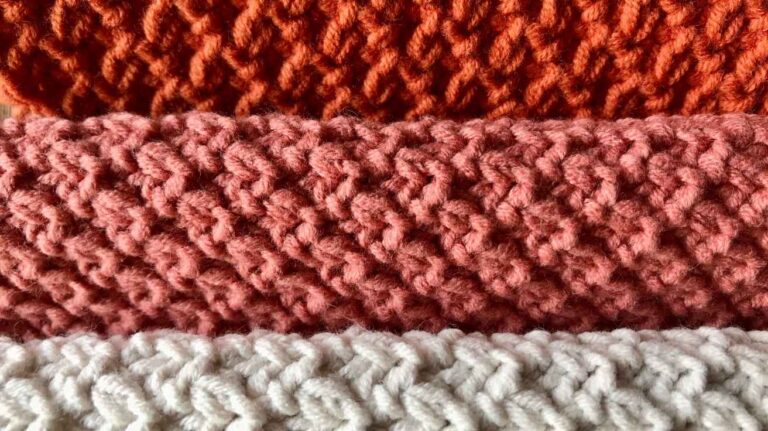
| Moss stitch | Woven-looking texture | Modern farmhouse designs |
| Basketweave stitch | Raised, woven texture | Decorative blankets |
Which Stitch Should Beginners Choose?
Half double crochet and double crochet are useful choices for beginners who want a blanket that grows at a manageable pace.
Single crochet is also beginner-friendly, but its shorter stitches generally require more rows to reach the same length.
The moss stitch can create a lovely woven appearance, though beginners may need extra practice to keep the stitch pattern consistent.
Choose one stitch pattern and make a sample before committing to a full blanket.
Crochet Farmhouse Blanket Size Guide
The best blanket size depends on its intended use. A baby blanket needs much less fabric than a blanket designed to cover a queen bed.
The following measurements are practical starting points, not universal standards.
| Blanket Type | Approximate Width | Approximate Length |
|---|---|---|
| Baby blanket | 30 inches | 36 inches |
| Lap blanket | 36 inches | 48 inches |
| Sofa throw | 50 inches | 60 inches |
| Twin-bed blanket | 66 inches | 90 inches |
| Queen-bed blanket | 90 inches | 100 inches |
How Much Yarn Will You Need?
Yarn requirements depend on the blanket’s dimensions, yarn weight, stitch pattern, hook size, and individual tension.
A useful way to estimate your yarn needs is to crochet a swatch, measure it, and calculate how much yarn it uses.
For example:
- Crochet a swatch measuring 6 by 6 inches.
- Weigh the swatch or measure the yarn used.
- Calculate how many equivalent swatches would cover your intended blanket.
- Add an allowance for borders, color changes, and finishing.
If a 6-by-6-inch swatch uses 15 grams of yarn, it represents 36 square inches. A 50-by-60-inch blanket covers 3,000 square inches, or about 83.3 swatch areas.
At that rate, the estimated yarn usage would be approximately 1,250 grams before adding an allowance for borders and finishing. Treat this as an estimate, not a guarantee.
Beautiful Color Ideas for a Farmhouse Blanket
Color selection has a major effect on the finished look. Farmhouse decor often favors natural shades, but you can personalize your blanket to suit your home.
Cream and Gray
This timeless combination works well with wooden furniture, neutral sofas, and simple interiors. Use cream as the main color and gray for alternating stripes.
Beige and White
Beige and white create a light, soft appearance. This palette works especially well in bedrooms and living rooms with warm wood accents.
Sage Green and Ivory
Sage green introduces a subtle natural tone without overpowering the design. Pair it with ivory or oatmeal for a calm, understated finish.
Charcoal and Cream
For stronger contrast, alternate charcoal gray with cream. This combination makes the stitch texture stand out.
Brown, Taupe, and Oatmeal
Earthy colors create a warm, rustic appearance. They also work well with wooden furniture, woven baskets, and natural-fiber accessories.
Design insight: Plan your stripes before crocheting. A quick color arrangement can help you avoid a combination that feels too busy or unbalanced.
Tips for Making Your Crochet Farmhouse Blanket Look Professional
Small details can make a noticeable difference in the finished blanket.
Keep Your Tension Consistent
Try to maintain a similar level of tension throughout the project. If your hands become tired, take a break rather than forcing yourself to continue.
Count Your Stitches
Count the stitches at the end of each row, especially during the first several rows. Accidentally skipping a stitch can make the blanket narrower as you work.
Choose Washable Yarn When Practical
If the blanket will be used daily, yarn with straightforward care instructions can make maintenance easier.
Always follow the manufacturer’s guidance rather than assuming every acrylic, cotton, or wool yarn can be washed and dried in the same way.
Make a Swatch First
A small test piece helps you evaluate stitch texture, hook size, and fabric drape. It also gives you a more reliable basis for estimating yarn requirements.
Finish the Edges Carefully
A simple border can make the blanket look more polished. Check that the corners lie flat and the border doesn’t pull the fabric inward.
Avoid Overcomplicating the Design
Farmhouse style often benefits from a restrained approach. One main color, one contrasting shade, and one optional accent color can be enough to create a beautiful result.
How to Style a Crochet Farmhouse Blanket at Home
Once your blanket is finished, display it where its texture and colors can complement your decor.
On the sofa: Fold the blanket lengthwise and drape it over one arm of the sofa. This creates a relaxed appearance while keeping the blanket easy to reach.
Over an armchair: Place it across the back or arm of a reading chair. A neutral striped design pairs well with wooden furniture.
At the foot of the bed: Fold the blanket into a neat rectangle and place it across the lower part of the bed.
In a woven basket: Roll or fold the blanket into a basket near the sofa. This makes it both decorative and practical.
As a handmade gift: Fold the finished blanket and tie it with a simple fabric ribbon. Include a care note explaining how to wash and dry the yarn safely.
A crochet farmhouse blanket can be both a functional household item and a decorative accent. Choosing colors that complement the room helps it feel like a natural part of the space.
Final Thoughts: Create a Cozy Blanket One Stitch at a Time
A crochet farmhouse blanket is a rewarding project that combines simple stitches, beautiful textures, and timeless colors. With the right yarn, a comfortable hook, and a manageable pattern, you can create a blanket that suits your home and your crochet experience.
Start with a straightforward stitch pattern, choose two or three complementary colors, and measure your work as you go. Take your time with the foundation chain, maintain consistent tension, and finish the edges carefully.
Most importantly, make the project your own. Choose the size, colors, and texture that suit your needs.
Ready to get started? Gather your favorite yarn, prepare your crochet hook, and begin creating a handmade blanket that brings warmth and character to your home. Save this guide for your next crochet project and share your finished design with fellow crochet lovers.